
South · אשקלון
Living in Ashkelon
A seaside city south of Ashdod, about fifty kilometers from Tel Aviv. Worth considering if you want the beach and a housing budget well below the center of the country, while taking into account its proximity to Gaza.
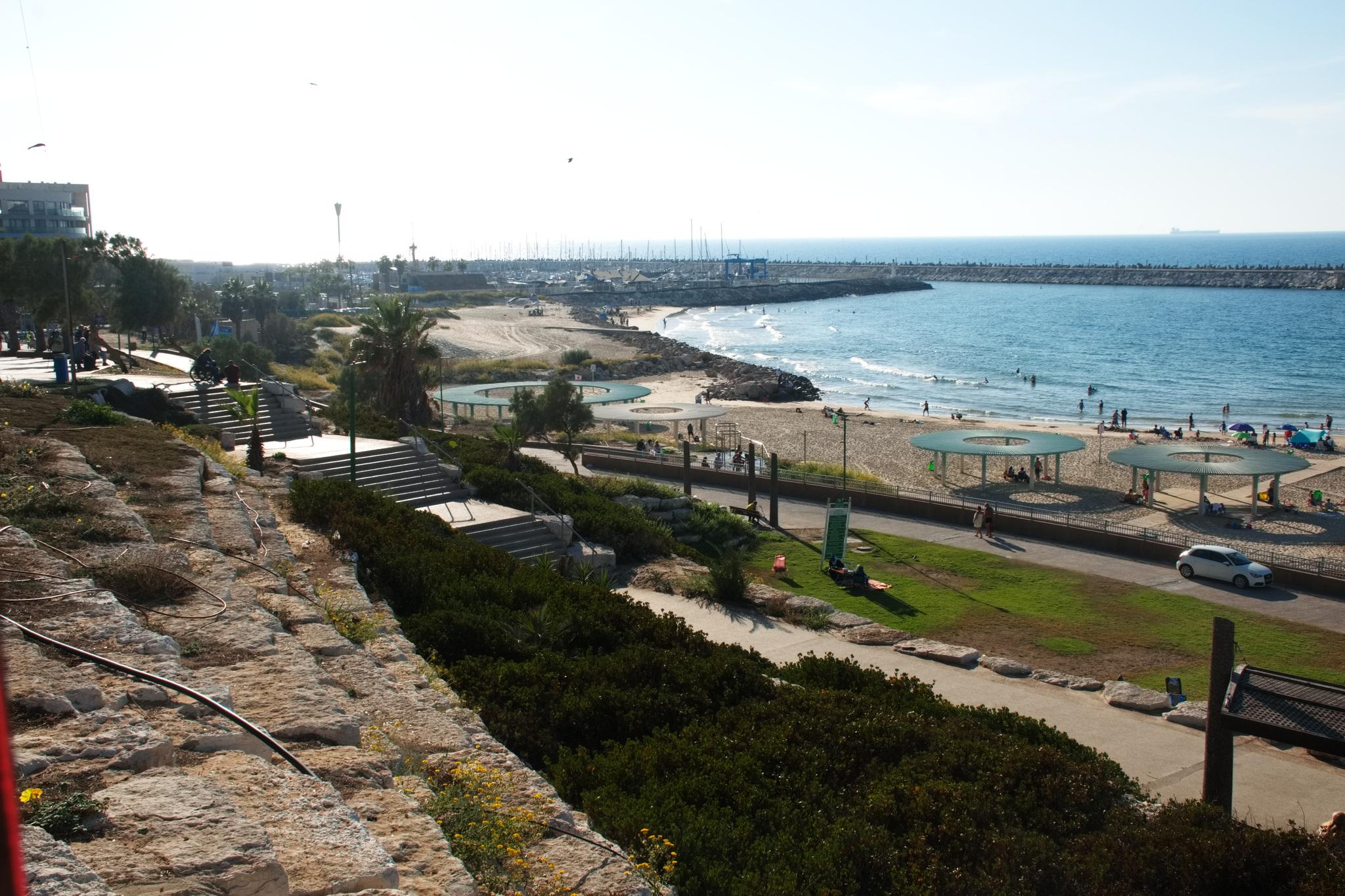
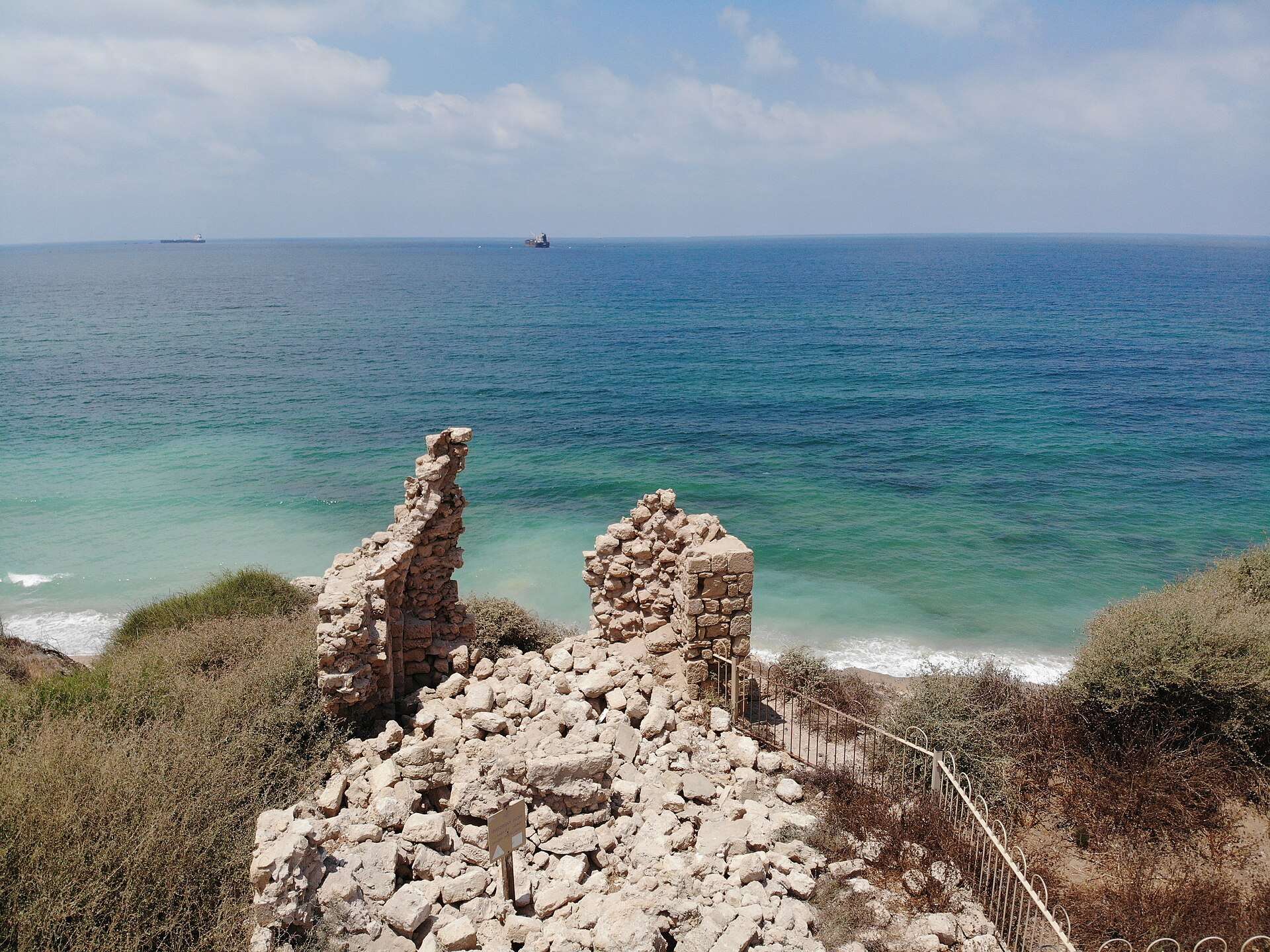
Photo: Anat Frank Gorali (ענת פרנק גורלי), via PikiWiki - Israel, CC BY 2.5
Average sale price 1.72 M₪ (Q3 2026, provisional) · average rent 3,710 ₪ per month · Tel Aviv 62 km away · 2 homes available
What people love
- Seven beaches approved for swimming, along about 12 kilometers of coastline.
- Low rents: an average of 3,708 ₪ per month from July to September 2026, compared with 5,132 ₪ nationwide (CBS).
- A hospital in the city, Barzilai, whose emergency department has been fortified since 2018.
Possible drawbacks
- Ashkelon is close to the Gaza Strip and experiences periods of alerts. The Iron Dome intercepts a large share of the rocket fire.
- Here, a safe room (mamad) is a criterion to prioritize. Recent homes all have one. The warning time for your area is listed on oref.org.il or in the Home Front Command app.
The city
Living in Ashkelon at a glance
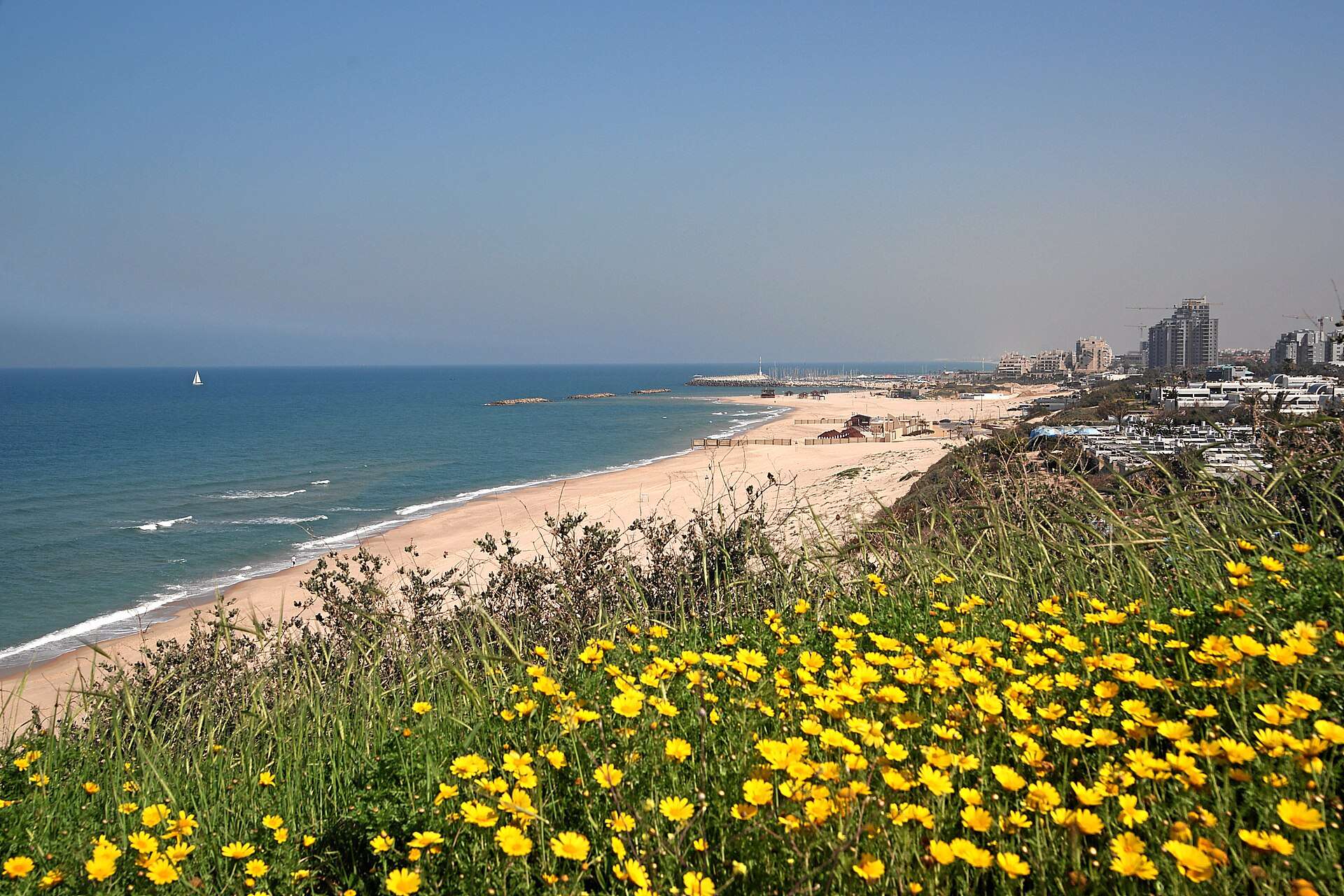
Ashkelon stretches along about 12 kilometers of coastline. The modern city was born in 1948-1949 around Migdal, a few kilometers from the sea, then expanded toward the shore with Afridar, annexed in 1955.
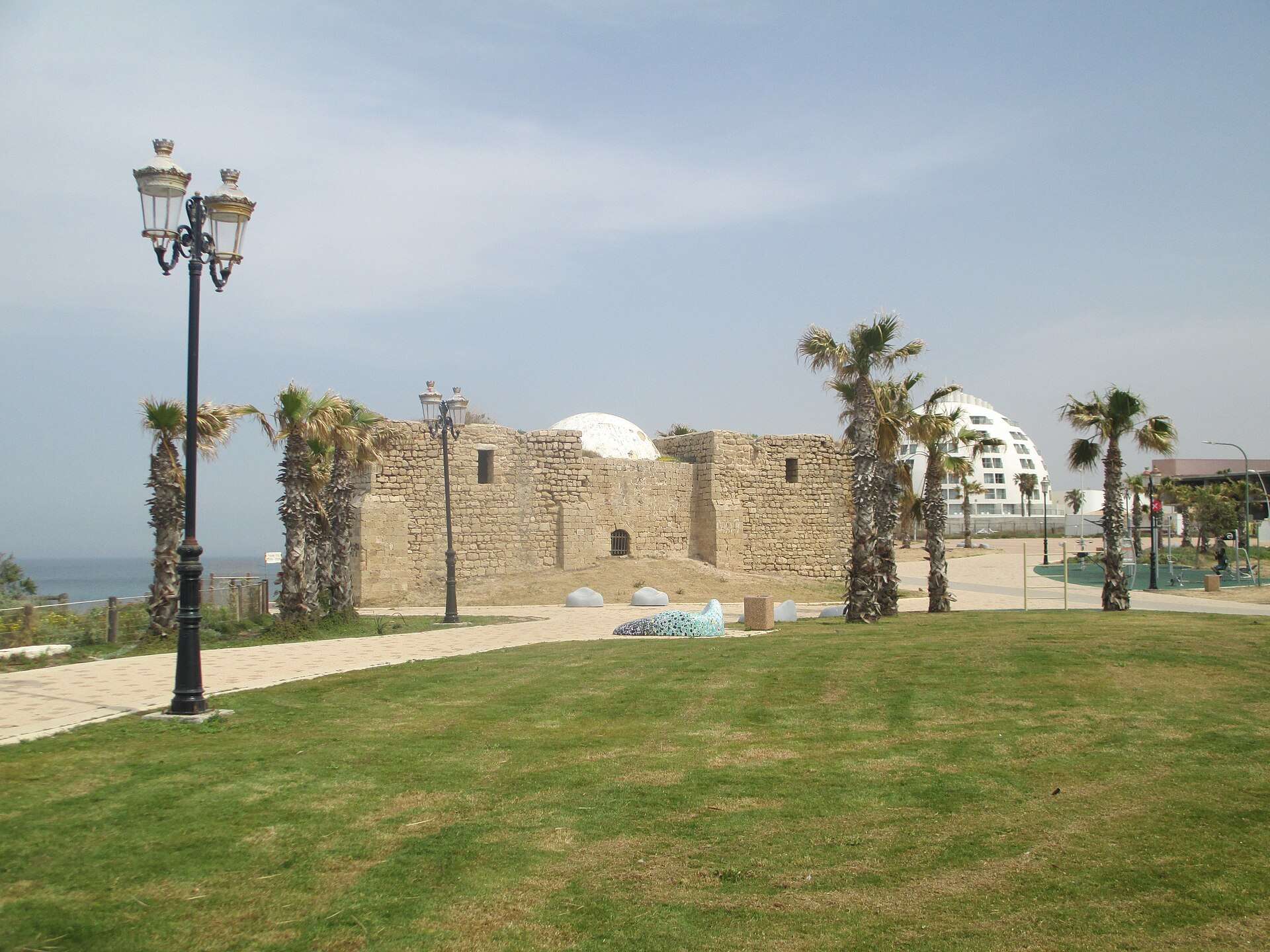
Today, the city is divided between northern neighborhoods, newer and residential, a center running from the old city to the marina, and fast-growing southern neighborhoods. On the waterfront, the national park preserves the ruins of ancient Ascalon.
Climate
The climate is Mediterranean. July is the hottest month, with about 31 °C in the afternoon; air conditioning is essential in summer.
Winter is mild: in January, nights drop to around 8 °C. The city gets an average of about 450 mm of rain per year, mostly from November to March.
People and languages
Ashkelon had about 152,000 residents in the 2022 census, with a median age of 35, and nearly 167,000 by the end of 2024: the city is growing fast.
It is a city of immigration. The first residents came mainly from North Africa and the Middle East; South African Jews founded Afridar in the 1950s, followed by British immigrants. In the 1990s, more than 50,000 immigrants arrived, mainly from the former USSR and Ethiopia. A long-established English-speaking association, ESOA, welcomes newcomers. Hebrew is still necessary for administration, work and school.
Economy and jobs
Ashkelon hosts major national facilities: the Rutenberg power station, which partly switched from coal to gas in 2023 and 2024, a large seawater desalination plant and the oil terminal of the Eilat-Ashkelon pipeline. The city has four industrial zones, including a high-tech park; the academic college and Barzilai hospital are also major employers.
Salaries remain below average: 10,846 ₪ per month on average in 2023, compared with 12,593 ₪ nationwide. In the 2022 census, 38% of workers had jobs outside the city. If you keep a job in the center of the country, factor in the commute.
Getting around
Ashkelon station, in the east of the city near the Abba Hillel Silver junction, is on the line to Lod and the center of the country; it was renovated in late 2022. The city's five entrances open onto Route 4, which runs along the coast. Buses connect Ashkelon to Tel Aviv, Jerusalem and Ashdod. From the center, by road and without traffic:
| Destination | Distance | By car |
|---|---|---|
| Tel Aviv | 62 km | ≈ 55 min |
| Jerusalem | 76 km | ≈ 70 min |
| Ben Gurion Airport | 64 km | ≈ 55 min |
| Ashdod | 23 km | ≈ 25 min |
| Beersheba | 60 km | ≈ 55 min |
| Rehovot | 40 km | ≈ 35 min |
| Rishon LeZion | 48 km | ≈ 40 min |
| Kiryat Gat | 24 km | ≈ 20 min |
Theoretical travel times without traffic, calculated with OpenStreetMap on November 23, 2026: at rush hour, expect it to often take considerably longer. Tap a destination for the train or bus route with current schedules.
Daily life
Eating out, shopping, having fun
Restaurants and nightlife
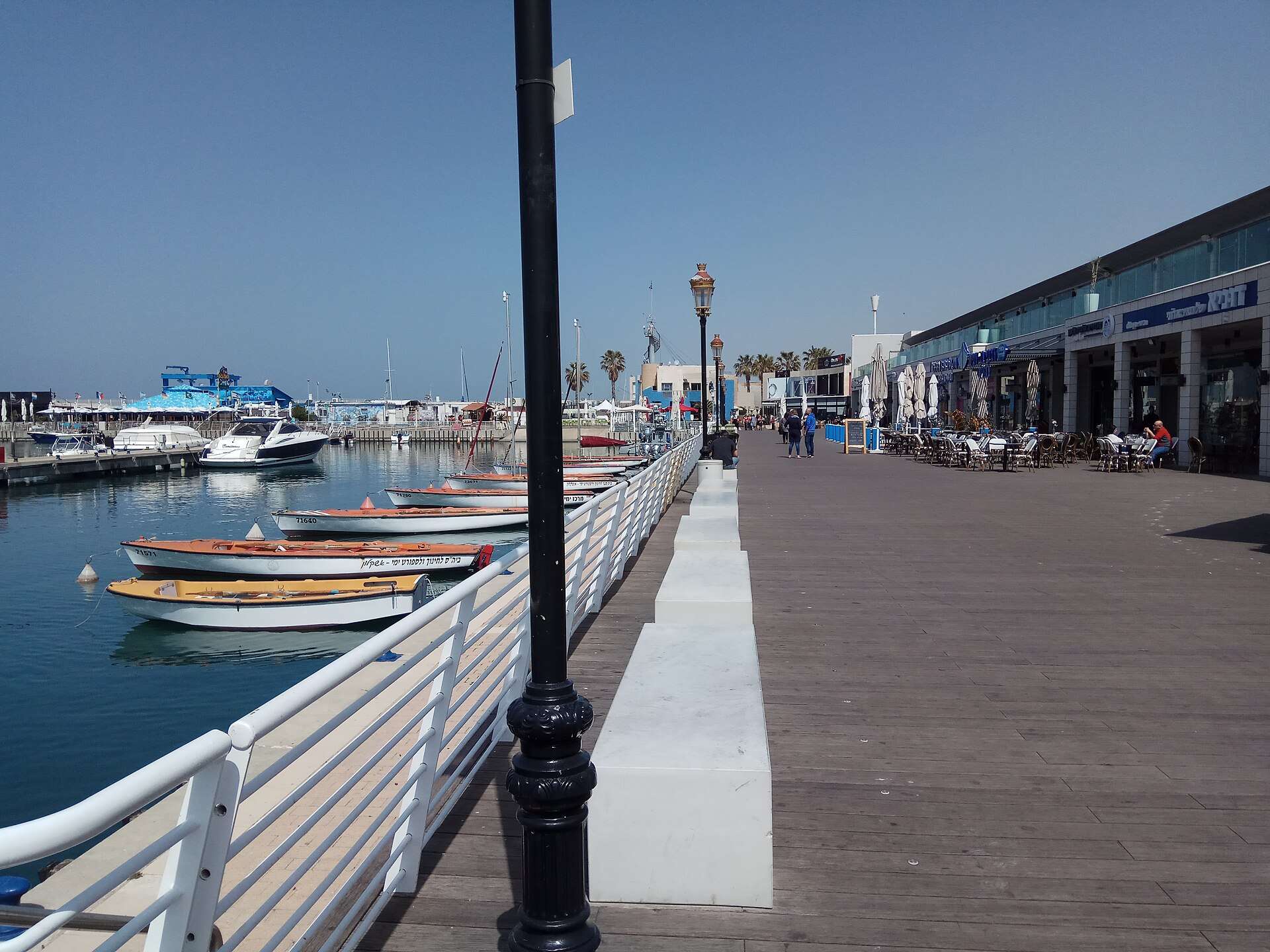
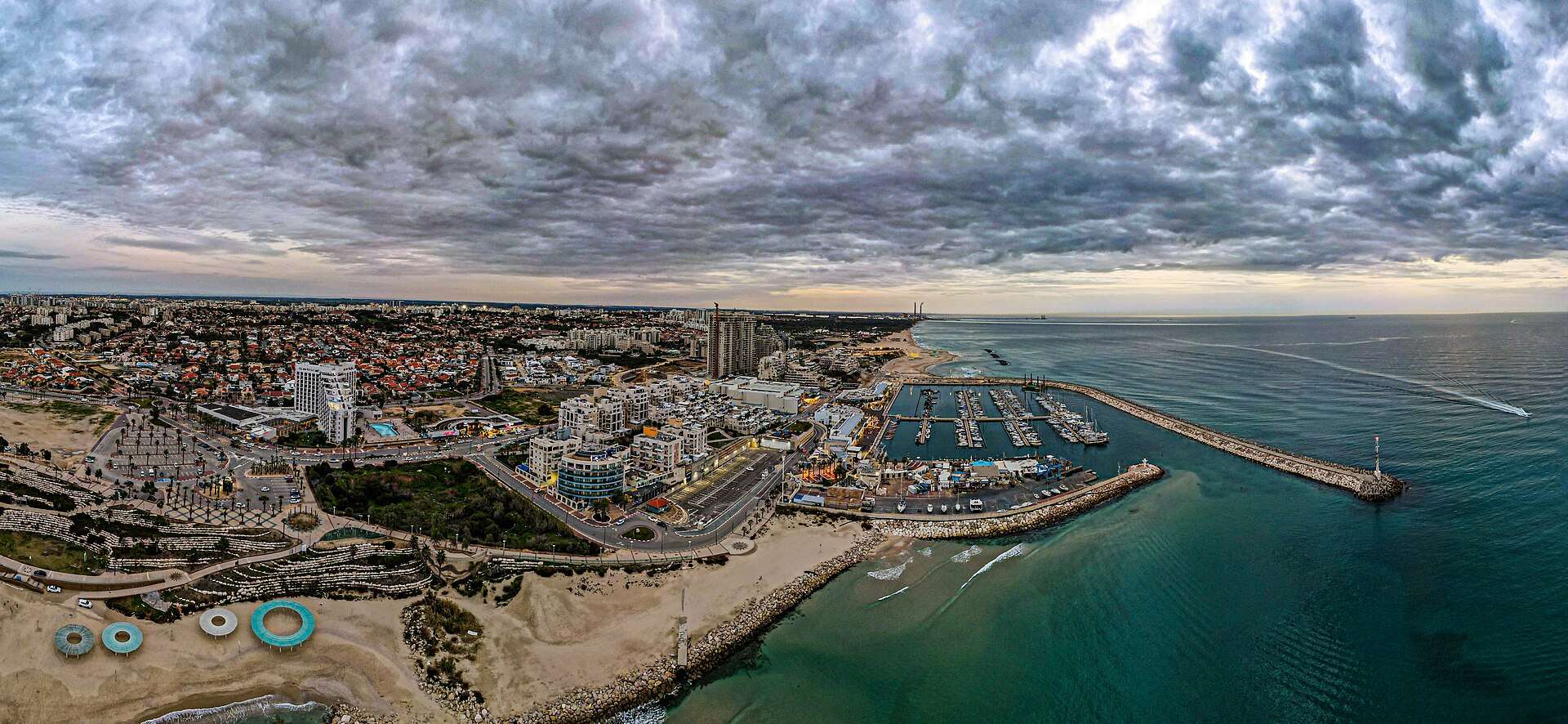
Nightlife is concentrated around the marina, along the seafront promenade and in the shopping centers. Some restaurants are kosher; check the certification according to your requirements.
Shopping
The city has several shopping centers: Hutzot at the main entrance, Giron on Ben-Gurion Boulevard, the Power Center near the train station, the Globus Center at the southern entrance, the Lev Mall in Neve Alonim and the Marina Mall, with a movie theater. The covered market is in the old city, in Migdal. Each neighborhood has its local shops.
Sports and leisure
The sea comes first: seven lifeguarded beaches, the promenade and the marina. The national park, covering more than 200 hectares on the waterfront, combines beach and ancient remains; the city also has about 27 parks, including Agamim park. On the cultural side: a performance hall, a music conservatory, the Khan museum in the old city and the Breeza festival in late August, largely free. The city has a second-division basketball club and a stadium.
Healthcare, schools and settling in
Barzilai hospital, opened in 1961, is in the city; for routine care, make sure a clinic of your health fund is close to your home. Schools are numerous, both public and religious, with several ORT technology high schools: identify the ones that suit your children before choosing a neighborhood. Ashkelon Academic College offers higher education. Ulpans operate in the city, and city hall has a contact person for new immigrants.
Neighborhoods
Where to look in Ashkelon?
Three questions for a first shortlist. Where do you work? If it's in the center of the country, measure the commute to the train station, east of the city. New or resale? The north and south have most of the recent construction, while the center has more resale properties. Does the home have a safe room? In Ashkelon, this is a key criterion in its own right.
Barnea
Since the 1970s
The large residential neighborhood in the north, close to Afridar in its standard of living.
Daily life. Barnea expanded in stages: Barnea B and C, nicknamed "the golf neighborhood," then Givat Barnea, Mitzpe Barnea and Naot Barnea. It is a residential area.
Good to know. The station is in the east of the city: without a car, plan on taking the bus to get there.
Housing. The neighborhood's listings give an idea of the homes available.
Afridar
Since 1951
The first modern neighborhood, founded by the South African Zionist Federation on the garden-city model.
Daily life. A central, open neighborhood. It is the birthplace of the city's English-speaking community, with an ORT high school founded in 1955.
Good to know. Houses and buildings from the early decades often need work: check the condition of the building and whether there is a safe room.
Housing. The neighborhood's listings give an idea of the homes available.
Marina et City
By the sea · Marina since 1995
The central seafront, between Bar Kochba and Delila beaches, and the City neighborhood, in the center.
Daily life. Marina, promenade, Marina Mall with its movie theater, lifeguarded beaches within walking distance. It is the liveliest area in the evening and in summer.
Good to know. Crowds and difficult parking in season. Ask about construction projects around the property.
Housing. The neighborhood's listings give an idea of the homes available.
Migdal (vieille ville)
Not by the sea · Historic center
The old city, inland, where modern Ashkelon was born.
Daily life. The covered market, the Hutzot shopping center at the city entrance, the Khan museum: all everyday shopping is within walking distance.
Good to know. Many older buildings: check the condition of the building, the elevator, parking and the shelter. The beach is reached by car or bus.
Housing. The neighborhood's listings give an idea of the homes available.
Agamim
Recent neighborhood
A new neighborhood in the south, in two parts, Agamim East and Agamim West.
Daily life. Thousands of homes built in recent years, with Agamim park and an ecological park in Agamim West.
Good to know. The neighborhood is still being built: ask about the timeline for schools, shops and transportation.
Housing. The neighborhood's listings give an idea of the homes available.
Ir HaYayin
Since the 2020s
The "Wine City," a large neighborhood under construction in the north of the city.
Daily life. Nearly 10,000 homes are planned there, around a neighborhood park.
Good to know. A neighborhood under construction for several years: check what will be built around the property and when the facilities will open.
Housing. New homes, under construction.
The listings counted are those whose advertiser specified the neighborhood; others remain visible across the whole city.
Housing
What budget, what kind of home?
In Ashkelon, average rents are among the lowest of the major cities tracked by the CBS. The size of the home affects the price far more than the neighborhood. The official averages below describe past sales and rentals; today's listings show the actual current price.
| Size | Purchase | Rent / month |
|---|---|---|
| 1 to 2 rooms | Too few sales | 2,780 ₪≈ 770 € |
| 2.5 to 3 rooms | 1.30 M₪≈ 360,000 € | 3,240 ₪≈ 900 € |
| 3.5 to 4 rooms | 1.73 M₪≈ 480,000 € | 4,040 ₪≈ 1,120 € |
| 4.5 rooms or more | 2.29 M₪≈ 634,000 € | 4,910 ₪≈ 1,360 € |
Sales, Q3 2026, provisional; rents, Q3 2026. For 4.5 rooms or more, the average purchase price shown is for 4.5 to 5 rooms. Euros at the Bank of Israel rate of November 27, 2026, for guidance only.
Today in Ashkelon: 0 property for sale, 0 rental and 2 new developments. By purchase budget:
Planning a move to Ashkelon?
Describe what you're looking for: our French-speaking team will get back to you and also search beyond the listings. Free, with no commitment.
Figures come from official or identified sources and from listings published on Alloj Immobilier; when information is missing, we say so rather than estimate it. The advice is from our editorial team. Page updated November 27, 2026. Sources and credits