
South · אילת
Living in Eilat
An isolated tourist city at the country's southern tip, between the desert and the Red Sea, with no train but a nearby airport. Worth considering if you are looking for sun, sea and VAT-free shopping, and if your work can be done locally or remotely.
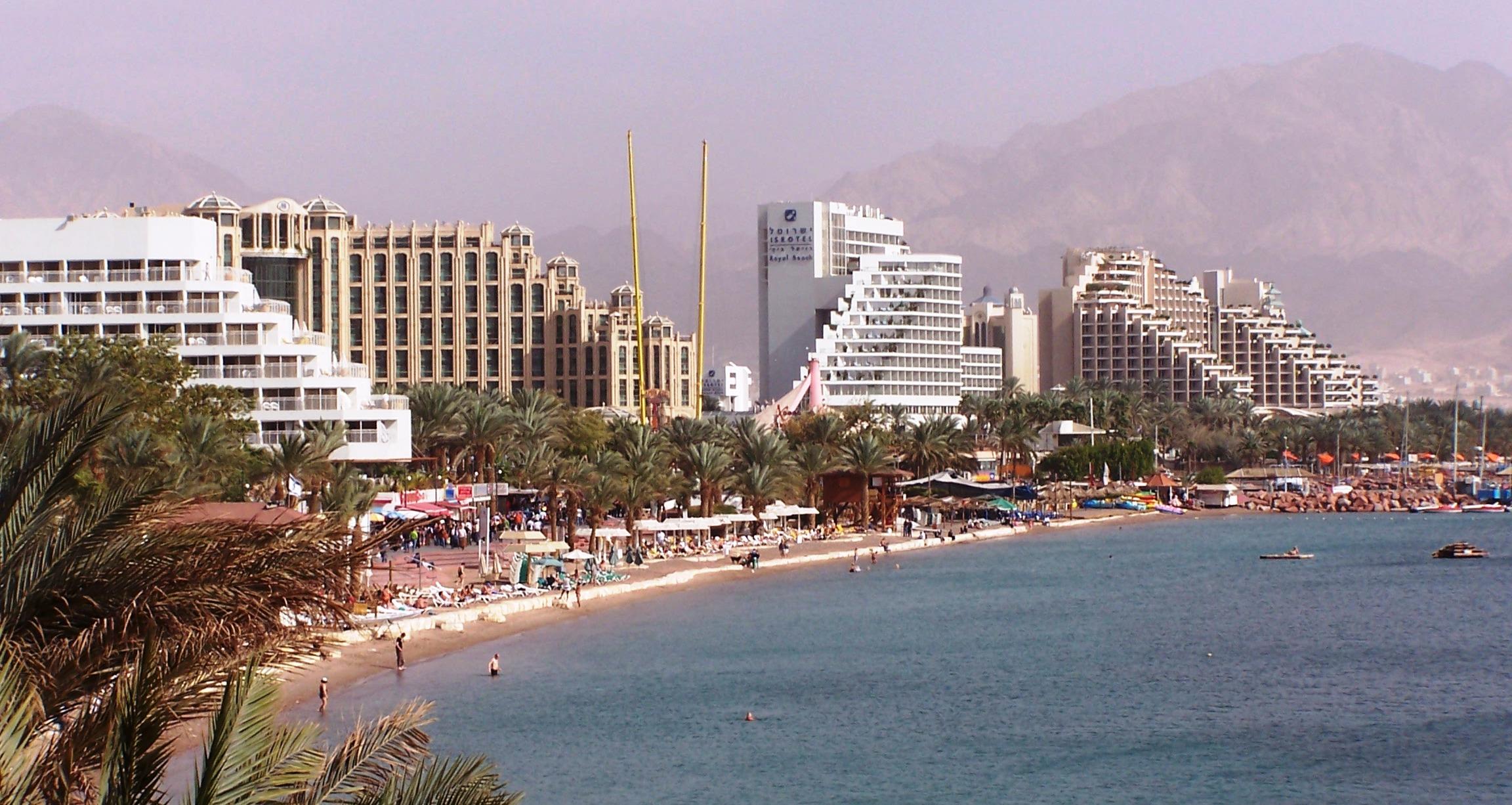
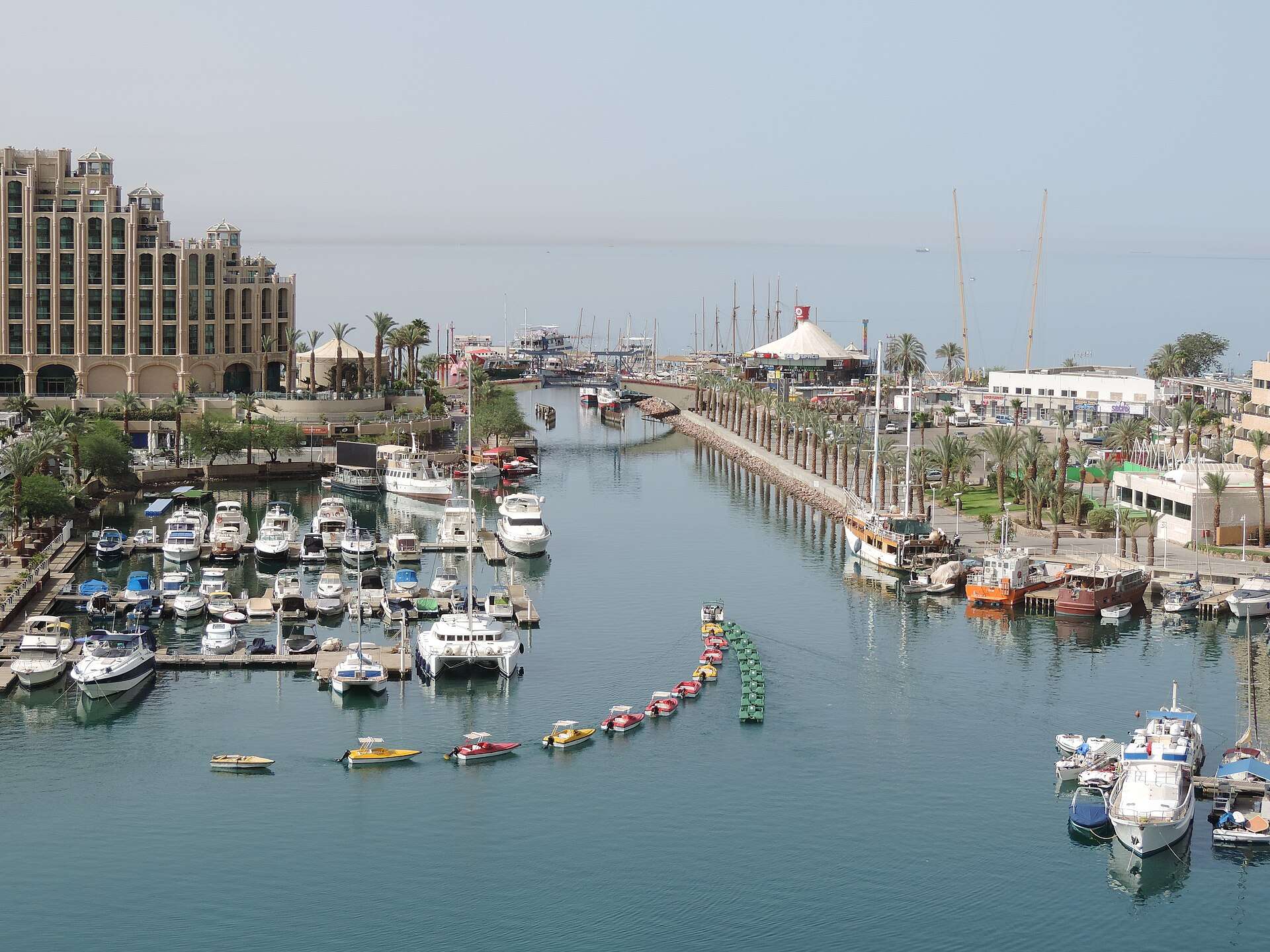
Photo: Henrik Reinholdson, CC BY 2.5
Tel Aviv 337 km away · 1 home available
What people love
- No VAT on most goods and services bought locally, nor on buying a home in Eilat: the city has been a free trade zone since 1985.
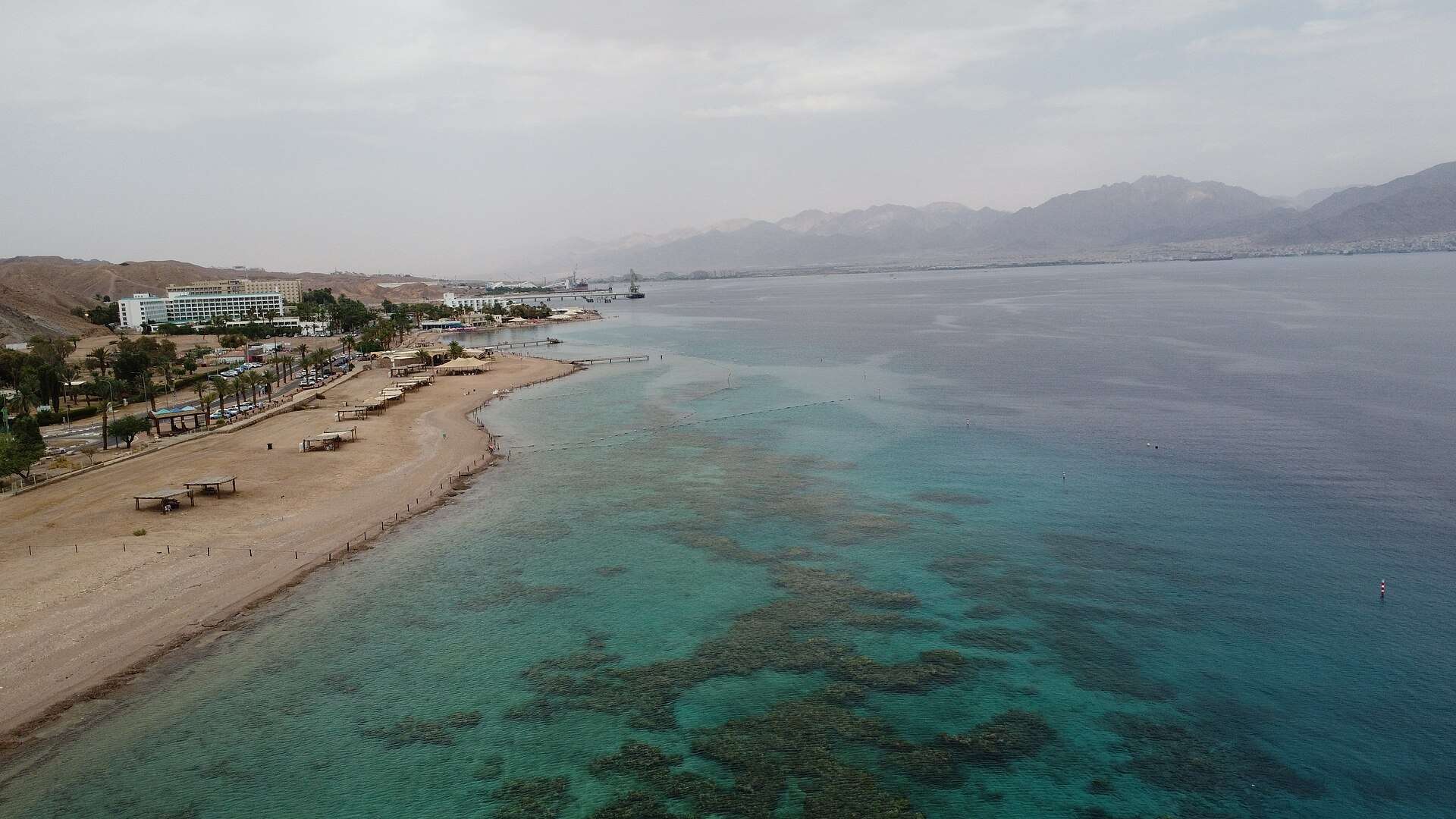
- The Red Sea and its coral reefs, protected by three marine reserves, right on the city's edge.
- Ramon International Airport, opened in 2019, about 18 km to the north.
Possible drawbacks
- A municipal tax (Arnona) that varies by zone.
- No train: Eilat is reached via Routes 90 and 12, by bus or by plane. The center of the country is far away.
- Jobs depend mainly on tourism. The port has been almost at a standstill since late 2023; in January 2026, it remained nearly empty and its future had not been decided.
The city
Living in Eilat at a glance
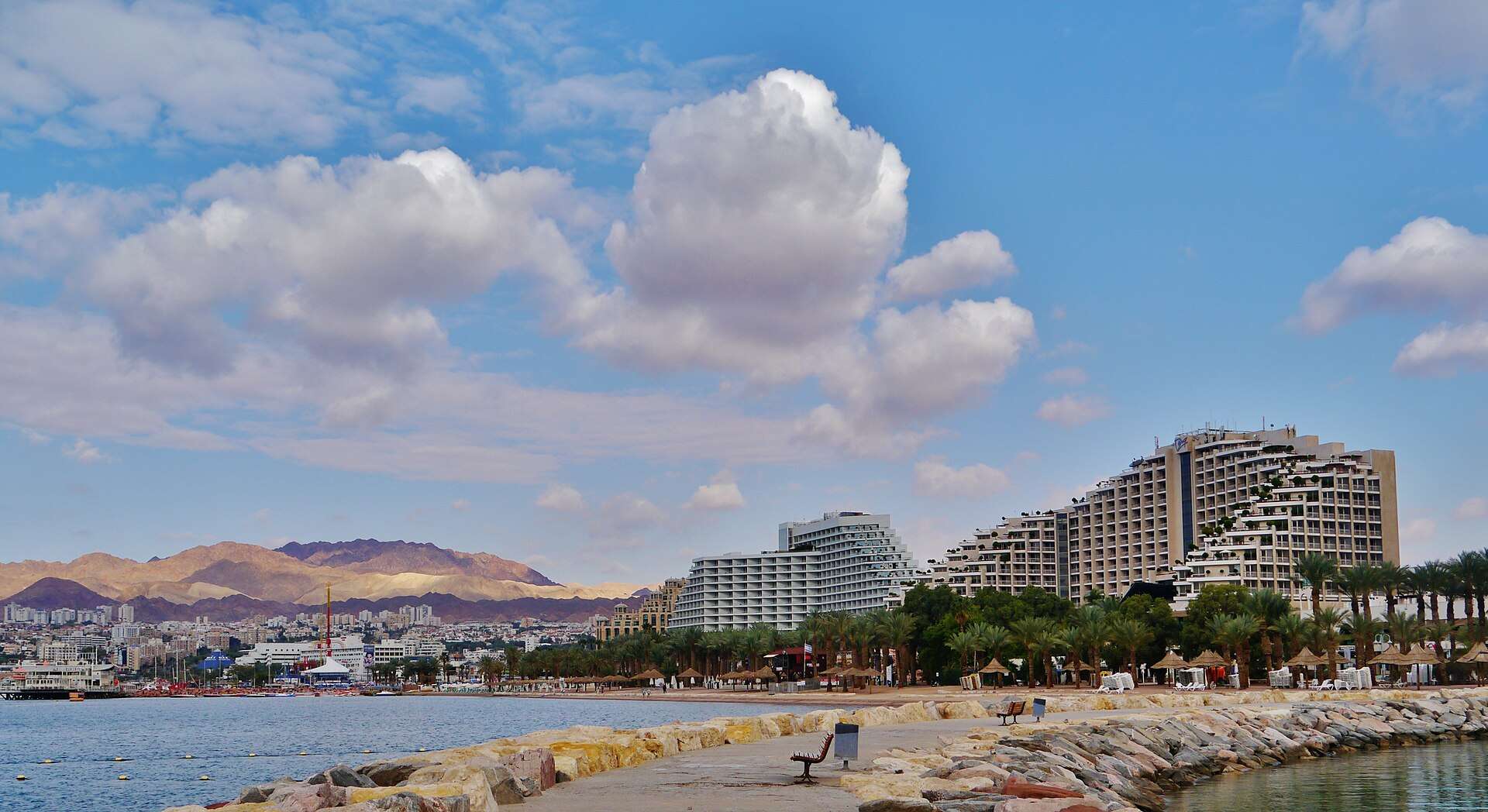
Eilat lies at the far end of the country, between the desert mountains and the Gulf of Eilat, facing Aqaba in Jordan and next to Taba in Egypt. It is first and foremost a vacation town: hotels, a promenade and beaches in the north, coral reefs in the south.
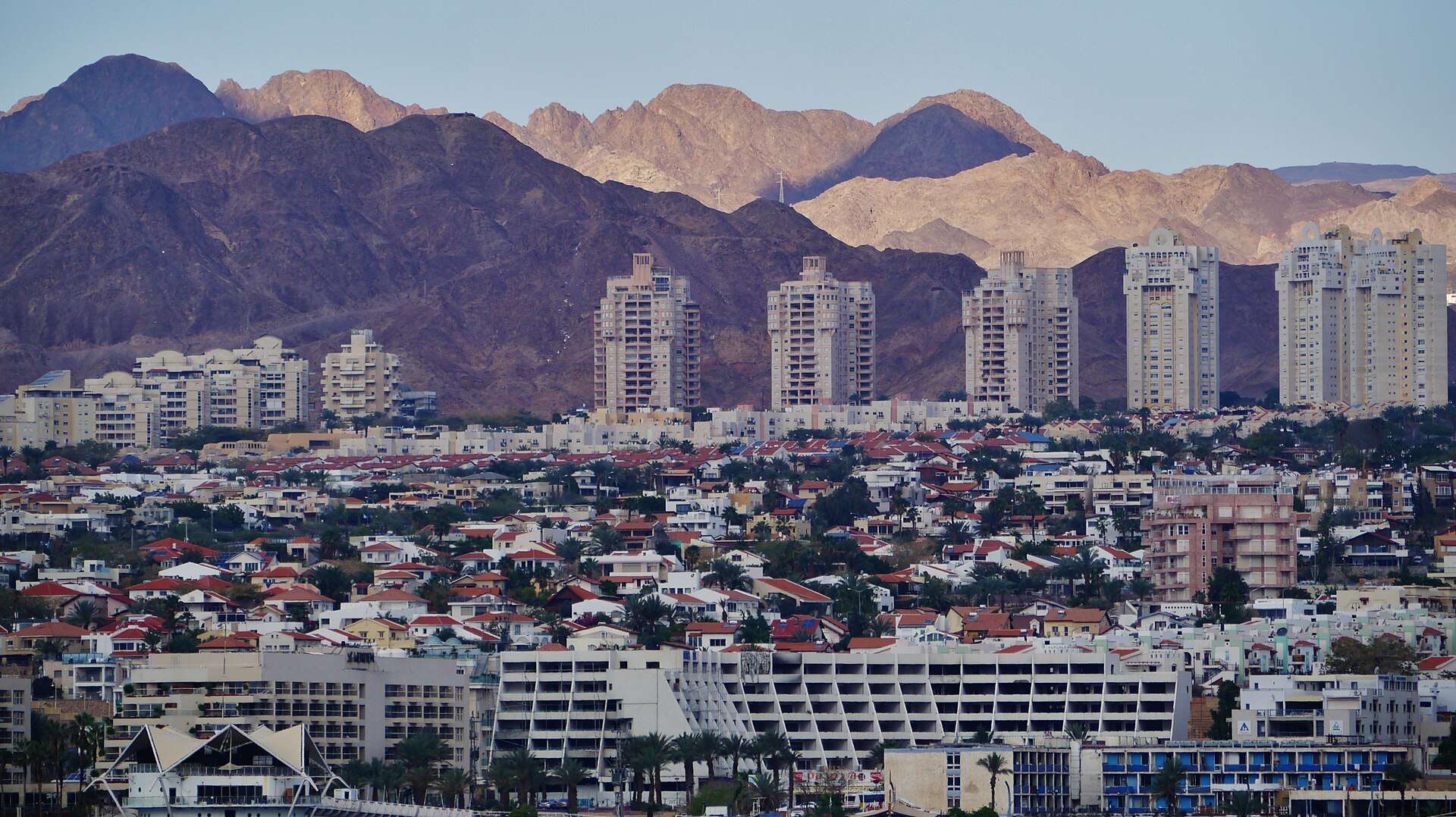
Residents live in fourteen residential neighborhoods, spread across the north, west, center and south of the city. There are no longer any traffic lights in the city: traffic circles have replaced them.
Climate
The climate is desert. From June to September, the heat is intense: over 35 °C in the afternoon, often 40 °C or more in July and August. The air is dry, and air conditioning is essential for much of the year.
Winter is mild and sunny, roughly between 11 and 22 °C in January. There is very little rain, less than 30 mm per year, but heavy downpours can cause flash floods.
People and languages
Eilat had about 55,200 residents in the 2022 census, with a median age of 35. The population changes a lot: in 2014, about two out of three residents had lived in the city for less than ten years. About 6% of residents are Arab (end of 2024), and many foreign workers are employed in hospitality, home care and construction.
Hebrew is still necessary for administration, work and school.
Economy and jobs
Tourism drives the city's economy: about 48 hotels and 11,000 rooms, mostly Israeli visitors, conferences and sporting events. Since 1985, the city has been a free trade zone: most goods and services bought and consumed locally are exempt from VAT, as is the sale of a home located in Eilat. Private cars, televisions, tobacco and jewelry over 200 dollars remain subject to VAT. Residents who have lived there for at least twelve months are also entitled to a 10% tax credit on employment income earned in the Eilat region, up to an annual cap: check the conditions.
The job market is local: in the 2022 census, only 5% of working residents worked outside the city. An agreement signed in 2019 plans about 18,000 new homes in nine new neighborhoods.
Getting around
There is no train: the country's southernmost station is in Dimona. Egged buses connect Eilat to the rest of the country almost every hour, with advance booking available. Ramon Airport, about 18 km to the north, handles domestic and international flights. The Taba and Yitzhak Rabin border crossings lead to Egypt and Jordan. From the center, by road and without traffic:
| Destination | Distance | By car |
|---|---|---|
| Aeroport Ramon | 22 km | ≈ 25 min |
| Parc de Timna | 28 km | ≈ 30 min |
| Mitzpe Ramon | 150 km | ≈ 135 min |
| Mer Morte (Ein Bokek) | 204 km | ≈ 180 min |
| Beersheba | 232 km | ≈ 200 min |
| Tel Aviv | 337 km | ≈ 280 min |
| Ben Gurion Airport | 328 km | ≈ 270 min |
| Jerusalem | 304 km | ≈ 275 min |
Theoretical travel times without traffic, calculated with OpenStreetMap on November 23, 2026: at rush hour, expect it to often take considerably longer. Tap a destination for the train or bus route with current schedules.
Daily life
Eating out, shopping, having fun
Restaurants and nightlife
The city has several dozen restaurants, pubs and bars, mostly around the promenade and the hotel area. Some restaurants are kosher; check the certification according to your standards.
Shopping
Without VAT, shopping costs less than elsewhere in the country, especially electronics, clothing and cosmetics. The main shopping centers are Mall HaYam, the Ice Mall with its ice rink, BIG Eilat and the Rechter Center, the oldest in the city.
Sports and leisure
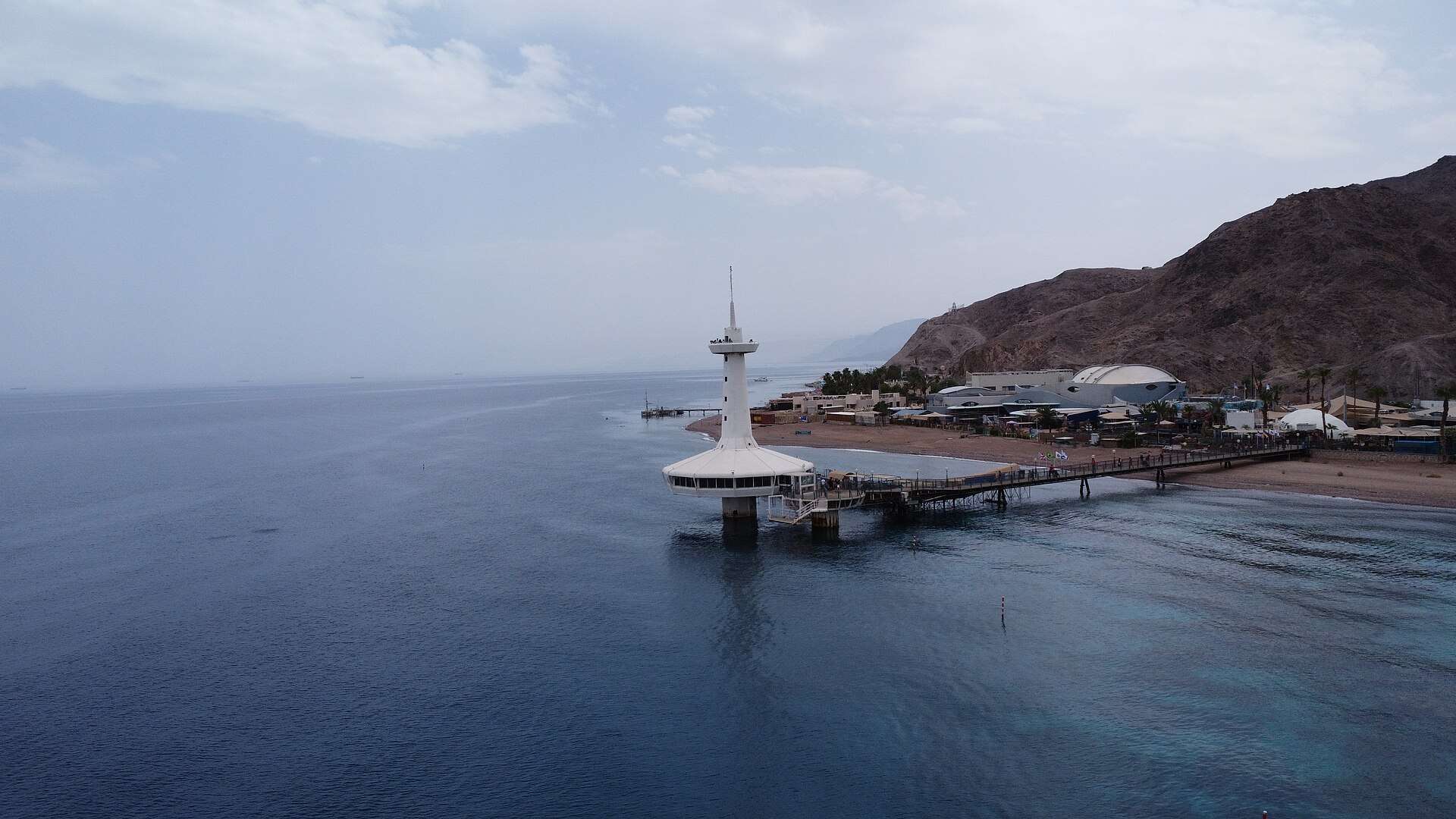
The sea comes first: lifeguarded beaches, diving and snorkeling in the Coral Beach reserve, the underwater observatory, Dolphin Reef and the marina. Nearby: Timna Park, the Hai-Bar Yotvata reserve and the trails of the Eilat Mountains, where the Shvil Israel ends. The city hosts the Red Sea Jazz Festival every year, and a water park opened in 2023.
Healthcare, schools and settling in
Yoseftal Hospital is the only hospital in the southern Negev. It is the smallest in the country, with 65 beds, and has a hyperbaric chamber for diving accidents. Check that a clinic of your health fund is close to the home. The city has about ten public elementary schools, three religious elementary schools and three public high schools, as well as a Ben Gurion University campus.
Neighborhoods
Where to look in Eilat?
Three questions for a first shortlist. Do you want to live near the sea or somewhere quiet? The tourist area is lively; the residential neighborhoods are farther from the beach. New or resale? The major new developments are planned on the former airport site and in new neighborhoods. What do you want within walking distance: schools, shops, the synagogue?
Front de mer et plage nord
By the sea
The hotel and promenade area, around the north beach and the marina.
Daily life. Promenade, beaches, hotels, restaurants and bars. The former airport, closed in 2019, is being redeveloped: hotels, about 1,000 homes and public spaces are set to connect the city center to the north beach.
Good to know. This is the most touristy part of the city. Check the schedule for the work on the former airport.
Housing. The neighborhood's listings give an idea of the homes available.
Quartiers de l'ouest (Urim, Mitzpe Yam, Tze'elim)
Not by the sea
Three residential neighborhoods in the west of the city: Urim, Mitzpe Yam and Tze'elim.
Daily life. Residential neighborhoods. The Tze'elim gym, open to residents, is in the neighborhood of the same name.
Good to know. The beach is reached by car or bus: check the travel time.
Housing. The neighborhood's listings give an idea of the homes available.
Quartiers du centre (Ofir, HaEshel, Yaelim, Arava, Tzofit)
Not by the sea
The central neighborhoods: Ofir, HaEshel, Yaelim (also called Neighborhood A), Arava and Tzofit.
Daily life. Residential neighborhoods in the heart of the city; Yaelim is also known as "Neighborhood A."
Good to know. Check the condition of the building, the air conditioning and the safe room before buying or renting.
Housing. The neighborhood's listings give an idea of the homes available.
Shahamon et Ganim
Not by the sea
The residential neighborhoods in the south of the city: Ganim A, Ganim B and Shahamon.
Daily life. Shahamon is divided into about ten numbered sections, from section 2 to section 11.
Good to know. Find out about planned projects around the property and the route to schools.
Housing. The neighborhood's listings give an idea of the homes available.
The listings counted are those whose advertiser specified the neighborhood; others remain visible across the whole city.
Housing
What budget, what kind of home?
The Central Bureau of Statistics does not publish an average rent for Eilat: its rent table only covers cities with over 100,000 residents. Current listings show the real market price. Remember to include air conditioning in your budget: it runs for much of the year.
Since the 1990s, every new home must have its own safe room (mamad). In an older building, check during the visit that there is a mamad or a shared shelter: it is a real plus for everyday comfort.
| Size | Purchase | Rent / month |
|---|---|---|
| 1 to 2 rooms | Too few sales | Information not available |
| 2.5 to 3 rooms | Too few sales | Information not available |
| 3.5 to 4 rooms | Too few sales | Information not available |
| 4.5 rooms or more | Too few sales | Information not available |
. For 4.5 rooms or more, the average purchase price shown is for 4.5 to 5 rooms. Euros at the Bank of Israel rate of November 27, 2026, for guidance only.
Also budget for Arnona (municipal tax): for 100 m², from 370 to 460 ₪ per month depending on the zone. Purchase costs (purchase tax, lawyer, broker if any) can be worked out with our cost simulator.
Today in Eilat: 0 property for sale, 0 rental and 1 new development. By purchase budget:
Planning a move to Eilat?
Describe what you're looking for: our French-speaking team will get back to you and also search beyond the listings. Free, with no commitment.
Figures come from official or identified sources and from listings published on Alloj Immobilier; when information is missing, we say so rather than estimate it. The advice is from our editorial team. Page updated November 27, 2026. Sources and credits