
Tel Aviv · רמת גן
Living in Ramat Gan
A large city right next to Tel Aviv, east of the Ayalon Highway, with the Diamond Exchange, large parks and Sheba Hospital. Worth considering if you work in the center of the country and are looking for residential neighborhoods close to Tel Aviv, with a high budget.
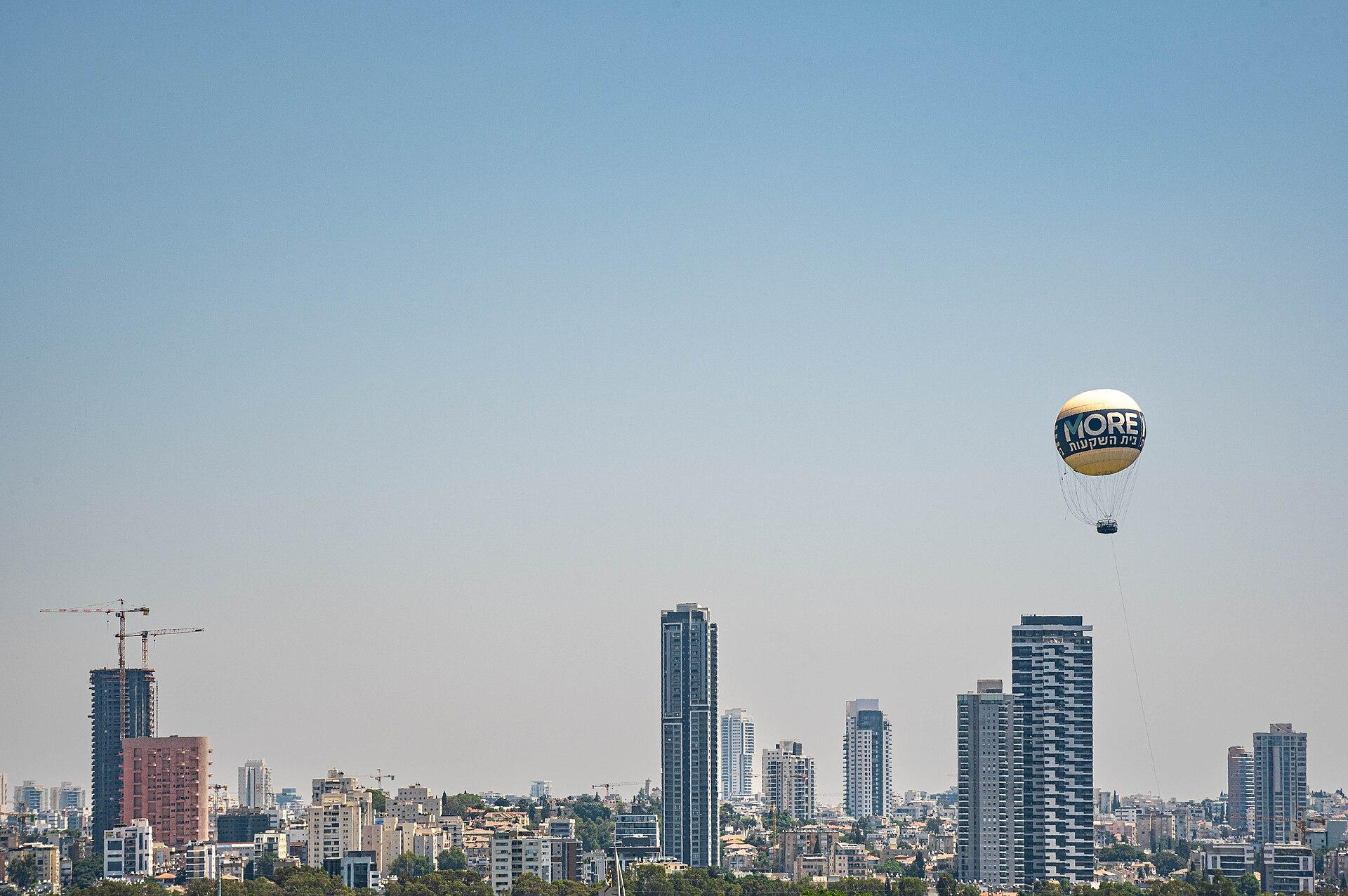
Photo: Ynhockey, CC BY-SA 4.0
Average sale price 3.05 M₪ (Q3 2026, provisional) · average rent 5,970 ₪ per month · Tel Aviv 5 km away · 2 homes available
What people love
- The Red Line of the light rail runs through the city, and two train stations are very close: Tel Aviv Savidor, linked to the Bourse neighborhood by a footbridge, and Bnei Brak.
- The country's largest hospital, Sheba Medical Center (Tel HaShomer), and Bar-Ilan University are in the city.
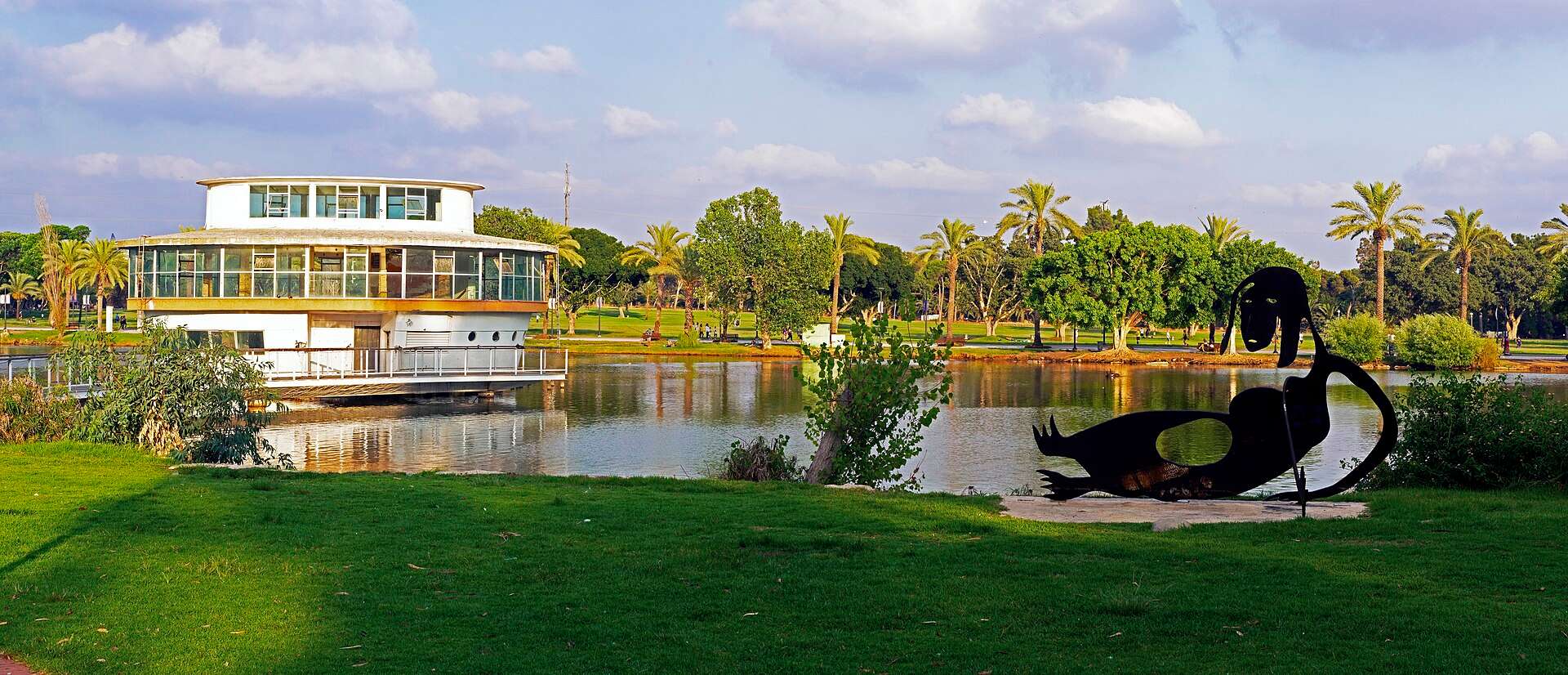
- About a quarter of the city is covered by public parks, including the National Park and the Safari.
Possible drawbacks
- Rents are well above the national average: 5,974 ₪ per month on average from July to September 2026, compared with 5,132 ₪ for the whole country.
- Several areas are being transformed by new towers, such as Rishonim and the Bourse neighborhood: find out about planned construction around the property.
The city
Living in Ramat Gan at a glance
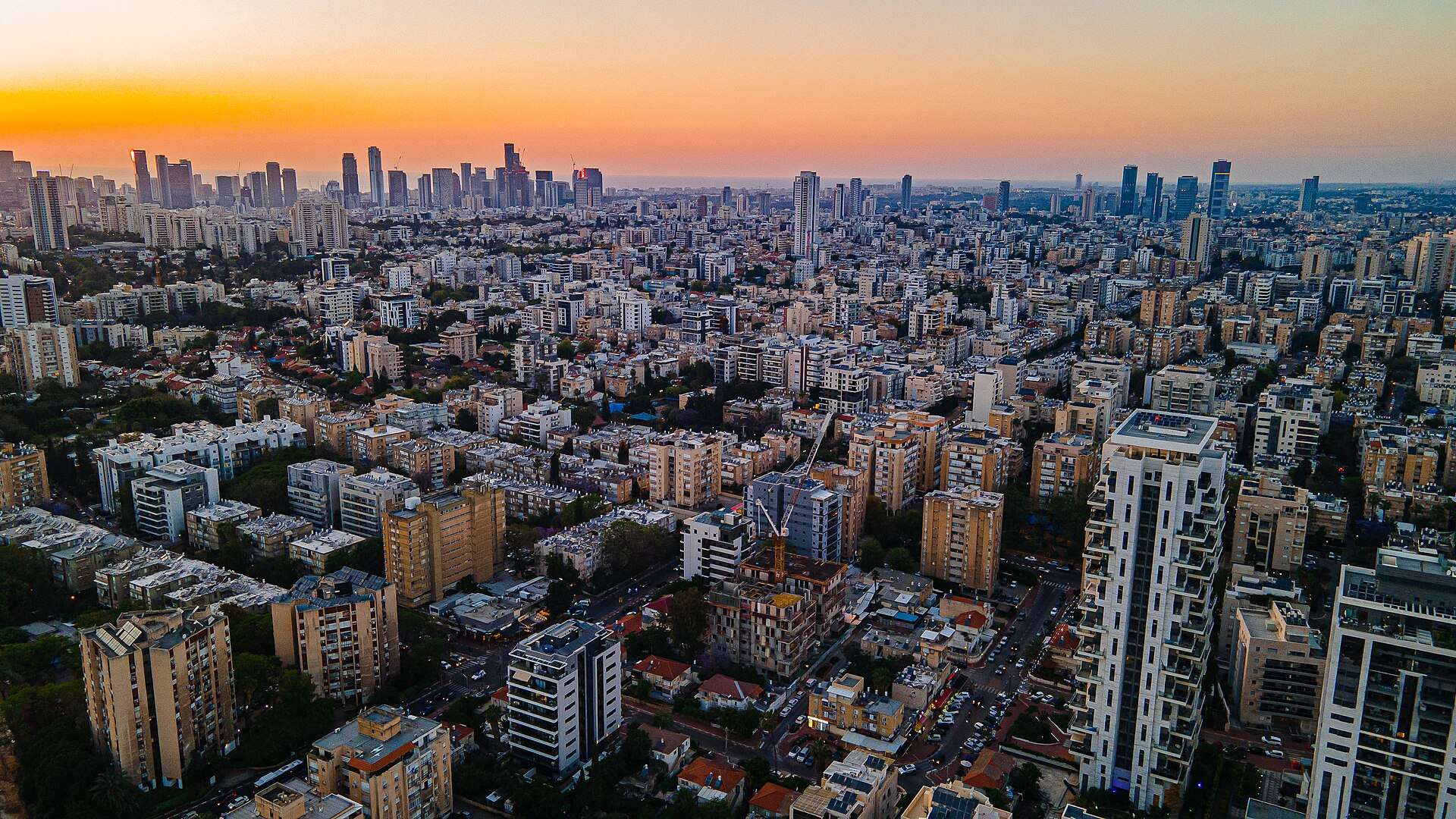
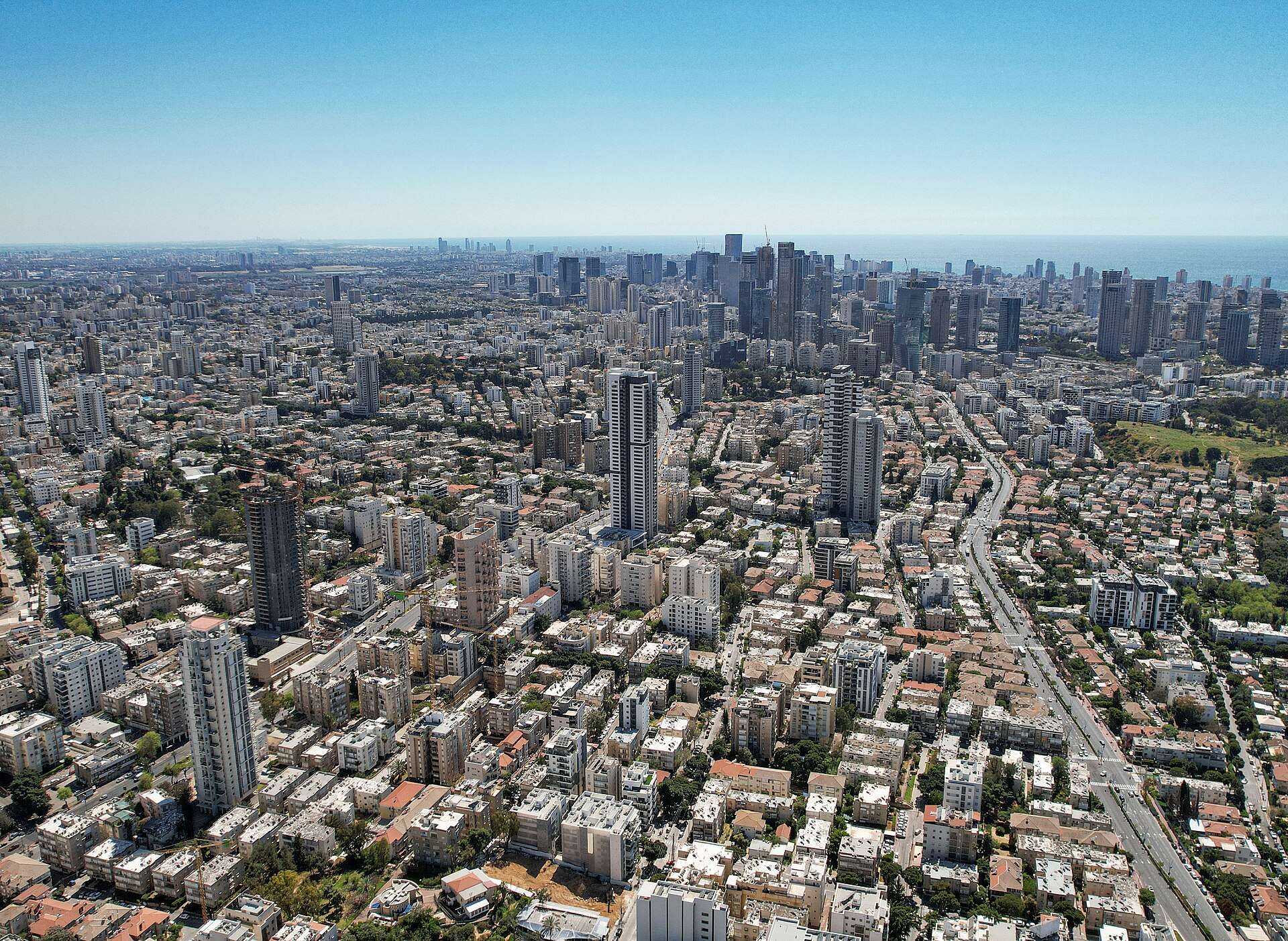
Ramat Gan borders Tel Aviv on its east side. Founded in 1921 as an agricultural village, it became a city in 1950. It spreads over small hills, between the Yarkon River to the north and Bnei Brak to the east.
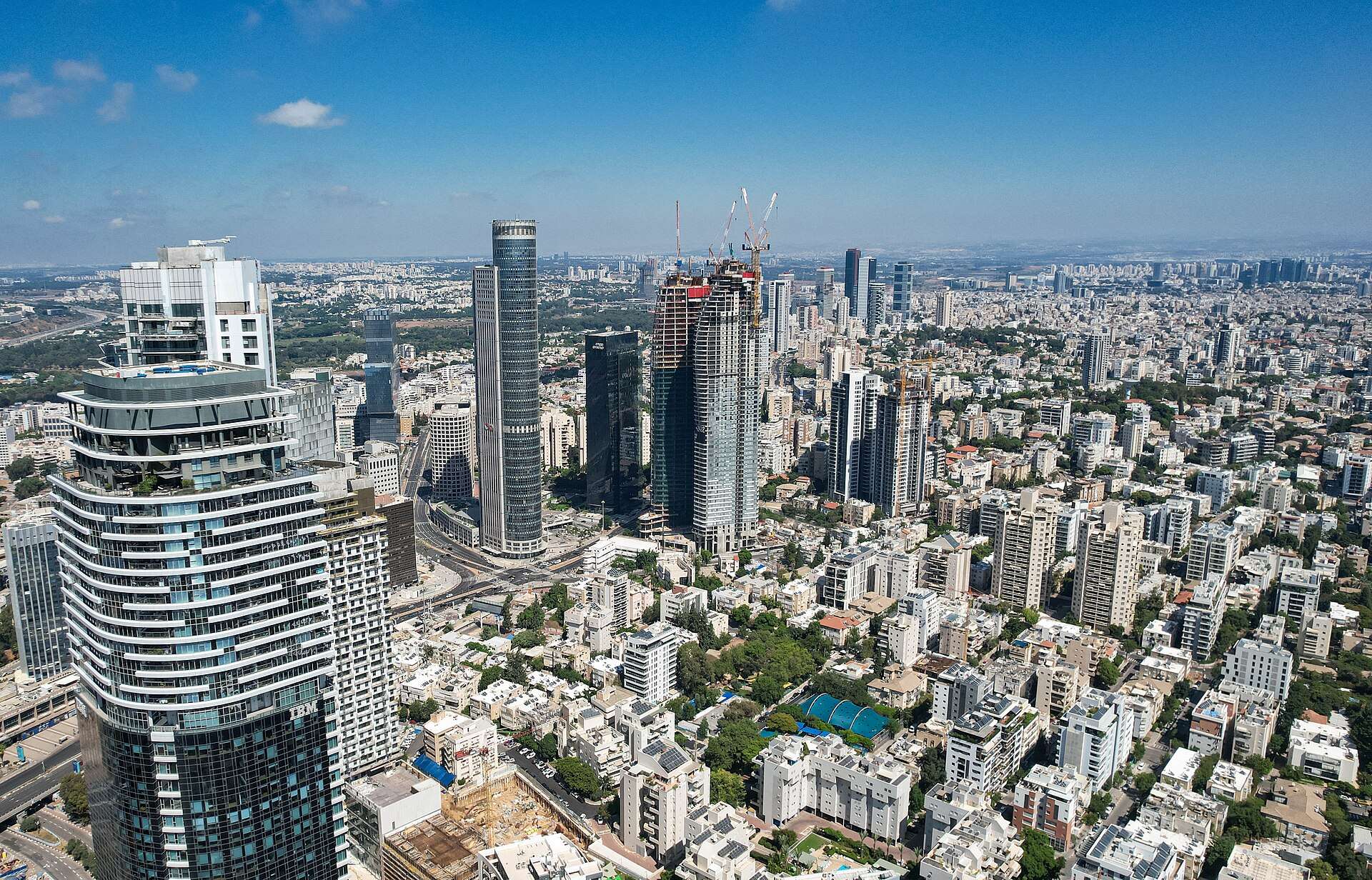
In the west, the Bourse neighborhood is lined with skyscrapers, including the Moshe Aviv Tower, one of the tallest in the country. The rest of the city is mostly residential, with many public gardens: about a quarter of its area is parkland.
Climate
The climate is Mediterranean. Summers are hot and dry, around 31 °C during the day and 21 °C at night. Days are a little hotter than in Tel Aviv, but the air is less humid and nights are cooler. Air conditioning is still essential.
In January, it is about 18 °C during the day and 8 °C at night. The city gets a little under 600 mm of rain per year, mostly in winter.
People and languages
Ramat Gan had 172,242 residents at the end of 2024. In the 2022 census, the median age was 36, and nearly half of households (48%) rented their home.
In the 1950s, many Jews from Iraq settled here; the city was even nicknamed "Little Baghdad." City Hall has a coordinator for English-speaking immigrants, but no municipal assistance specifically for new immigrants. Hebrew is still necessary for administration, work and school.
Economy and jobs
The Bourse neighborhood, in the west, is one of the country's major business centers: the Israel Diamond Exchange, bank headquarters, high-tech companies, law firms and many embassies. The city is also home to the headquarters of the Histadrut, the major labor federation.
Many residents work elsewhere: in the 2022 census, 67% of workers worked outside the city, often in nearby Tel Aviv. In 2023, the average monthly salary of an employee living in the city was 17,071 ₪, compared with a national average of 12,593 ₪.
Getting around
The Red Line of the light rail runs under Jabotinsky Street, with Bialik and Abba Hillel stations. Tel Aviv Savidor and Bnei Brak train stations are at the city limits. On Saturdays, municipal bus lines connect the city to Tel Aviv. A Purple Line of the light rail is planned to Sheba and Bar-Ilan. From the center, by road and without traffic:
| Destination | Distance | By car |
|---|---|---|
| Tel Aviv | 5 km | ≈ 10 min |
| Ben Gurion Airport | 20 km | ≈ 25 min |
| Jerusalem | 63 km | ≈ 55 min |
| Herzliya | 13 km | ≈ 15 min |
| Petah Tikva | 9 km | ≈ 15 min |
| Rishon LeZion | 14 km | ≈ 15 min |
| Netanya | 34 km | ≈ 30 min |
| Haifa | 108 km | ≈ 80 min |
Theoretical travel times without traffic, calculated with OpenStreetMap on November 23, 2026: at rush hour, expect it to often take considerably longer. Tap a destination for the train or bus route with current schedules.
Daily life
Eating out, shopping, having fun
Restaurants and nightlife
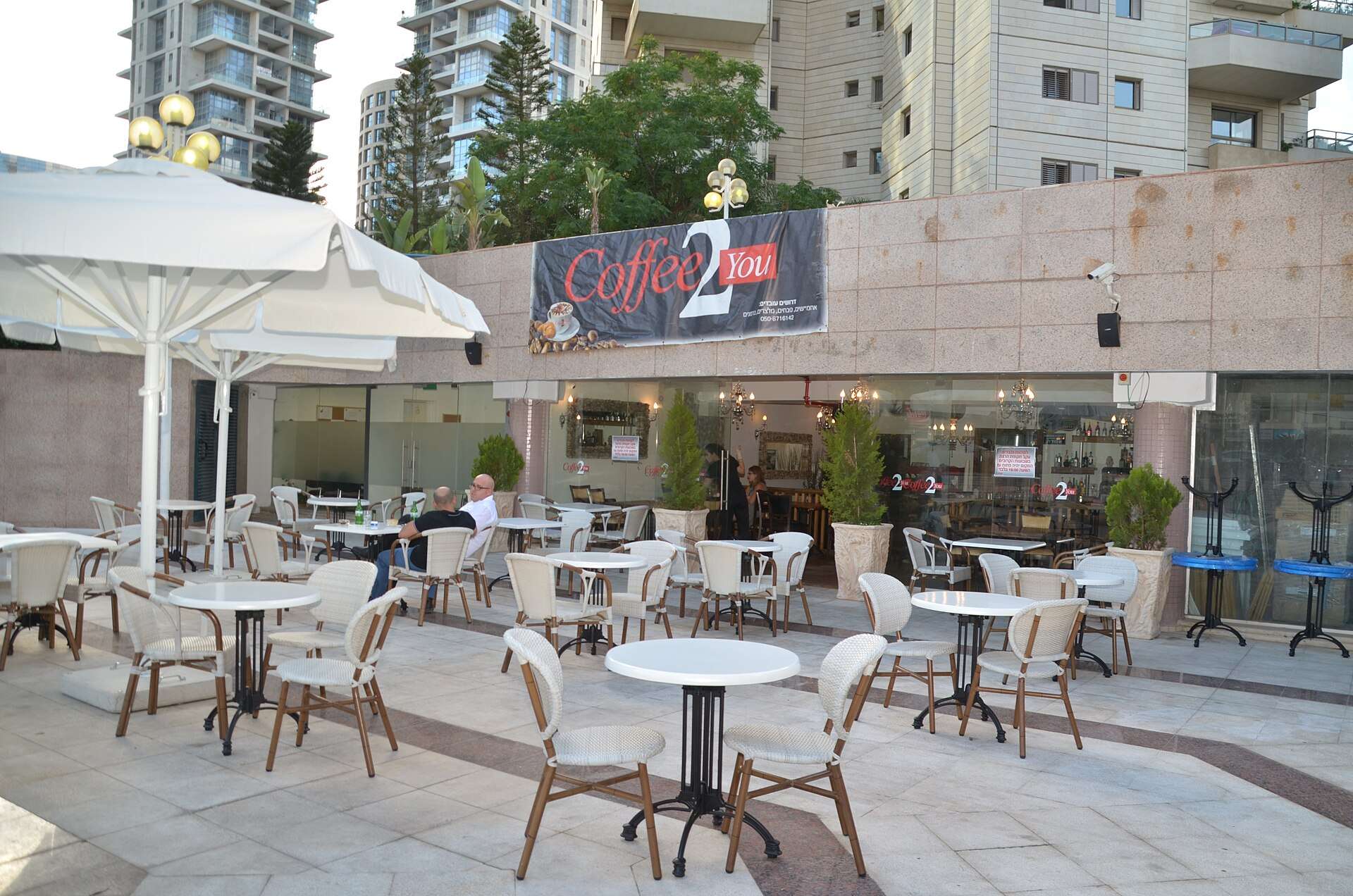
Cafés and restaurants are concentrated around Bialik Street and Orda Square, in the center, and in the Bourse neighborhood. Sabich, an eggplant and egg sandwich very popular in Israel, was born in Ramat Gan among Iraqi immigrants. If you eat kosher, check each restaurant's certification.
Shopping
Ayalon Mall is near the stadium. Other centers serve the neighborhoods, such as the Bialik Center and the Ofer Merom center in Merom Naveh. Bialik Street, the city's first street, is still a shopping street. Each neighborhood has its local shops.
Sports and leisure
Parks come first: the National Park, very busy on holidays, and the Safari, a zoological park of about 100 hectares with a section you can tour by car. A pedestrian and bike path runs along the Yarkon to Tel Aviv. For culture: several theaters, two movie theater complexes and about ten museums, including the Museum of Israeli Art. Winter Stadium hosts the city's soccer clubs, and the basketball club plays in the top division.
Healthcare, schools and settling in
Sheba Medical Center, the country's largest hospital, is in the east of the city. The health funds have many centers here: check that a center of your health fund is close to the home. For higher education, there is Bar-Ilan University and several colleges, including Shenkar (engineering and design). In 2023-2024, 87.7% of high school seniors earned the Israeli matriculation (bagrut) certificate. Look into schools before choosing a neighborhood.
Neighborhoods
Where to look in Ramat Gan?
Three questions for a first shortlist. Where do you work? If it's in Tel Aviv, being close to the light rail or a train station matters a lot, and the west of the city is the closest. Apartment or house? The southern neighborhoods, such as Ramat Hen, still have many houses, while the west is filling up with towers. What do you want within walking distance: a park, schools, shops?
Centre-ville
Since 1921
The historic heart, around Bialik and Herzl Streets, with the neighboring areas of Tel Binyamin, HaGefen and Nahalat Ganim.
Daily life. City Hall, Bialik Street and its shops, Orda Square, King David Garden and its shaded paths. The Red Line's Bialik station is very close.
Good to know. Many older buildings: check the building's condition, the elevator and parking.
Housing. Mostly apartments in older buildings, including Bauhaus-style buildings.
Rishonim
Since 1921
The city's first neighborhood, in the west, between Jabotinsky Street, the Ayalon Highway and Givatayim.
Daily life. The Bourse neighborhood and Tel Aviv are very close, as is the Red Line of the light rail.
Good to know. The neighborhood is changing fast: find out about planned construction around the property.
Housing. Many new residential towers are gradually replacing older buildings.
Ramat Yitzhak
Since 1933
One of the city's oldest and largest neighborhoods, with about 16,000 residents.
Daily life. Yerushalayim Avenue runs through it. A large synagogue, two elementary schools, a swimming pool, a gym and the Ramat Gan Theater.
Good to know. Check the commute to the light rail or a train station if you work in Tel Aviv.
Housing. The neighborhood's listings give an idea of the homes available.
Merom Naveh
From the 1980s to 2012
A neighborhood built on the city's last large orchard, around David Park.
Daily life. About 4,800 residents. The park of about 4 hectares, with a fountain and an artificial stream, is surrounded by buildings; the shops, including the Ofer Merom center, are grouped in the center, with no road to cross.
Good to know. Check the commute to the light rail or a train station if you work in Tel Aviv.
Housing. Mostly high-rise buildings around the park.
Ramat Hen
Annexed to the city in 1953
A residential neighborhood in the south, between Tel Aviv, Givatayim and the National Park.
Daily life. About 7,000 residents. Blich High School, two elementary schools, and the National Park, the Safari and the Maccabiah Village just to the east.
Good to know. There is no train station or light rail station in the neighborhood: check the commute if you work in Tel Aviv.
Housing. Mostly single-family or semi-detached houses, and a few small buildings.
Kiryat Krinitzi et Ramat Efal
Since 1972 (Kiryat Krinitzi)
The eastern neighborhoods, near Sheba Hospital and Bar-Ilan University.
Daily life. Kiryat Krinitzi, about 4,000 residents, has large green spaces. Ramat Efal, about 3,200 residents, is a former village annexed to the city in 2008.
Good to know. The Purple Line of the light rail is not yet in service: check bus lines to your workplace.
Housing. The neighborhood's listings give an idea of the homes available.
The listings counted are those whose advertiser specified the neighborhood; others remain visible across the whole city.
Housing
What budget, what kind of home?
In Ramat Gan, prices vary mainly with the size of the home and the neighborhood. The official averages below describe past sales and rentals; today's listings show the actual current price.
Since the 1990s, every new home must have its own safe room (mamad). In an older building, check during the visit that there is a mamad or a shared shelter: it's a real plus for everyday comfort.
| Size | Purchase | Rent / month |
|---|---|---|
| 1 to 2 rooms | Too few sales | 4,240 ₪≈ 1,180 € |
| 2.5 to 3 rooms | 2.44 M₪≈ 676,000 € | 5,550 ₪≈ 1,540 € |
| 3.5 to 4 rooms | 3.15 M₪≈ 872,000 € | 6,860 ₪≈ 1,900 € |
| 4.5 rooms or more | 4.16 M₪≈ 1,153,000 € | 8,430 ₪≈ 2,330 € |
Sales, Q3 2026, provisional; rents, Q3 2026. For 4.5 rooms or more, the average purchase price shown is for 4.5 to 5 rooms. Euros at the Bank of Israel rate of November 27, 2026, for guidance only.
Today in Ramat Gan: 0 property for sale, 0 rental and 2 new developments. By purchase budget:
Planning a move to Ramat Gan?
Describe what you're looking for: our French-speaking team will get back to you and also search beyond the listings. Free, with no commitment.
Figures come from official or identified sources and from listings published on Alloj Immobilier; when information is missing, we say so rather than estimate it. The advice is from our editorial team. Page updated November 27, 2026. Sources and credits